5 min read
EBC Barcelona 2023: MiCA's Stablecoin Clock Starts Ticking
In late October, around 5,000 attendees and 250 speakers packed two days of the European Blockchain Convention's ninth edition in Barcelona. The hallway conversation didn't really care about hackathons or the headline panels. Four months earlier, MiCA had come into force, and the room knew the regulation's stablecoin chapter was about to reshape European crypto in a way US and Asian markets weren't being asked to think about yet.
The clock had started
MiCA was published in the EU Official Journal on 9 June 2023 and came into force on 29 June. The full regulation didn't bind anyone immediately. The stablecoin rules covering e-money tokens (EMTs) and asset-referenced tokens (ARTs) were set to apply from 30 June 2024, leaving issuers and exchanges roughly eight months to get their houses in order.
The headline requirements weren't soft. EMT issuers, the category that captures single-fiat stablecoins like USDC and any euro-pegged equivalent, would need authorisation as a credit institution or an e-money institution under EU law. Reserves must be 1:1, segregated, and held with credit institutions. No interest can be paid to holders. If a stablecoin gets classified as "significant" (over 5 million users, €1 billion in market cap, or 2.5 million transactions per day), the rules tighten further, including transaction volume caps when the asset is used widely as a means of exchange.
Two camps on the floor
The conversation in Barcelona split cleanly. One camp was building for MiCA: exchanges wiring up listing reviews, payments firms designing EMT-compliant issuance flows, and a handful of banks asking pointed questions about what e-money authorisation actually buys them in the new framework. The other camp was hedging. Several non-EU operators we spoke to were frank. Their plan was to wait, watch the first wave of authorisations land, and figure out what compliance actually costs before committing.
Underneath both camps, the same question kept surfacing. What happens to USDT in Europe? Tether had no public roadmap toward EMT authorisation, and the implication of MiCA was clear. Non-compliant issuers would need to come off regulated EU exchanges. The largest stablecoin in the world, with USDT holding over 70% of the market versus USDC's 20%, was about to lose access to a tier-one regulated jurisdiction.
Euro stablecoins finally have a reason to exist
For most of crypto's history, the euro stablecoin market has barely registered. In 2023, more than 90 percent of fiat-backed stablecoins were pegged to the US dollar, and Tether and Circle together accounted for 93 percent of the total stablecoin market cap. Circle's EURC, the third-largest euro stablecoin at the time, had a circulating supply of around $52 million. Tiny, by any measure.
MiCA gave that picture a structural reason to change. EU-licensed exchanges and payments platforms would, by mid-2024, need to clear the regulatory bar to keep listing or settling in non-compliant USD stablecoins. Euro-denominated EMTs from authorised issuers (banks, e-money institutions, regulated fintechs) suddenly had a clear runway. Several panels in Barcelona made the same point in different words. The next twelve months would either build a real euro stablecoin market, or expose Europe's continued dependence on offshore dollar liquidity.
What this means for infrastructure
Compliance changes the unit economics of everything around it. EMT issuers face capital, reserve, and audit requirements that look more like a bank than a crypto startup. Exchanges and wallet providers serving the EU need to evidence custody arrangements that hold up under MiCA's broader CASP framework. Payment processors integrating stablecoins need to be confident their issuer of choice will still be on the legal side of the line in eight months.
The teams building the infrastructure layer got the most hallway attention in Barcelona. Custody providers, key management, transaction monitoring, and reserve attestation were no longer optional features. They were the difference between launching a compliant EMT in 2024 and missing the window entirely.
What we took back
EBC 2023 was the first major European industry gathering after MiCA had become real law instead of a draft document. The event read less like a celebration and more like a deadline meeting. Eight months to reshape stablecoin operations, two competing strategies in the room, and a clear winner emerging: the builders who treated MiCA as a forcing function rather than a problem.
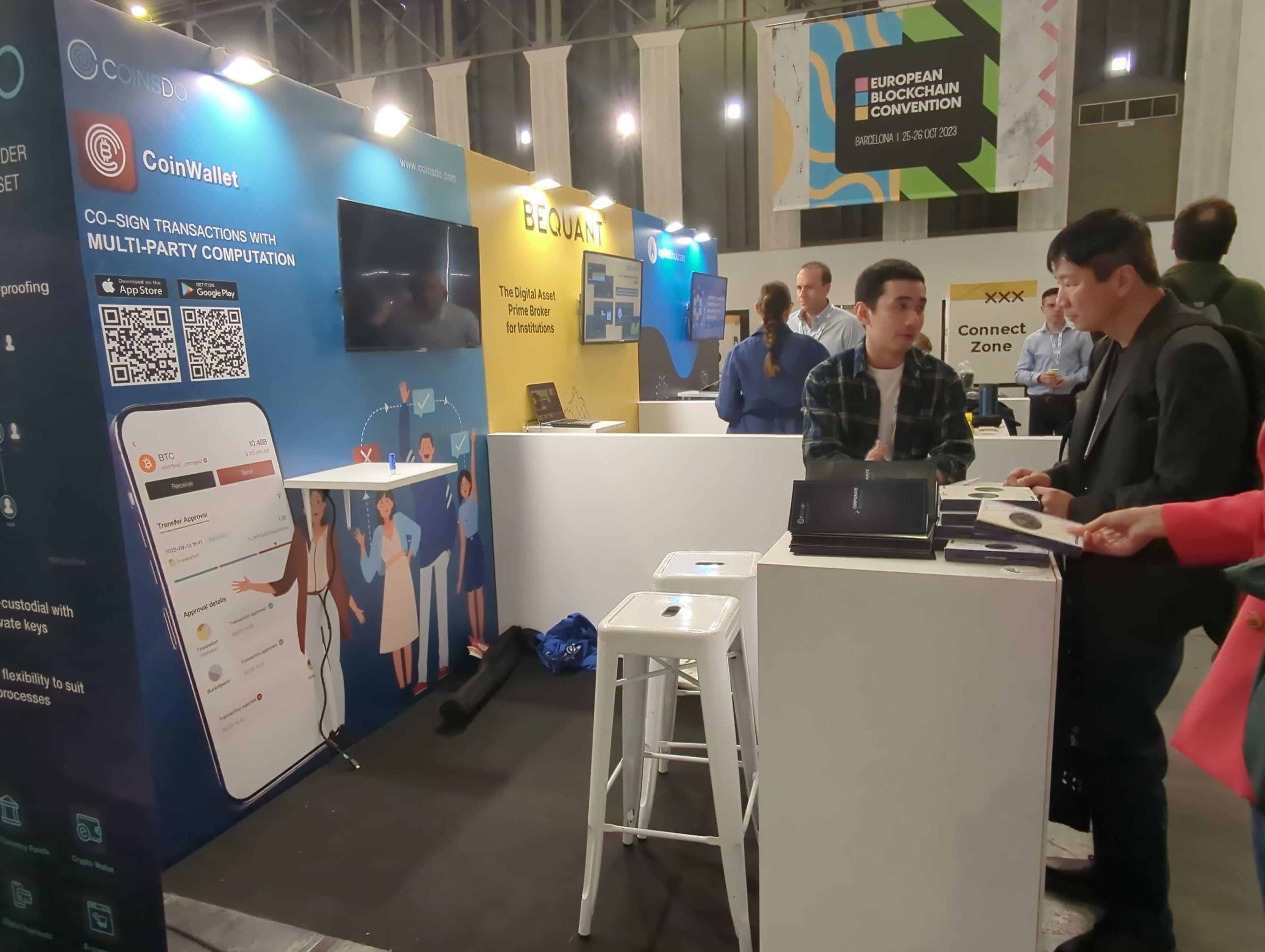
Always glad to share our insights with like-minded individuals

We're here!

So many people here. The energy is crazy